Kühnel Lab at IMBG 2025

The Kühnel Lab visited Grenoble for the 9th International Conference of the Institute of Metals in Biology Grenoble (IMBG) 2025!

This year’s topic of Fuel Synthesis through Photo- and Electrocatalysis attracted a number of great speakers and posters. We also had the chance to present both a talk and a poster on CO2 reduction and photoreforming.

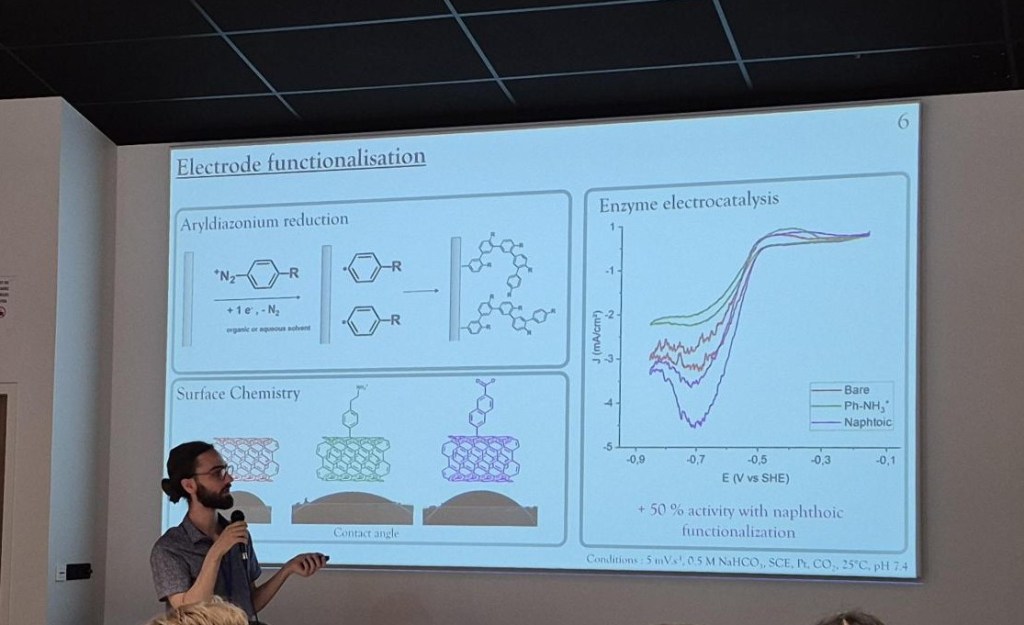
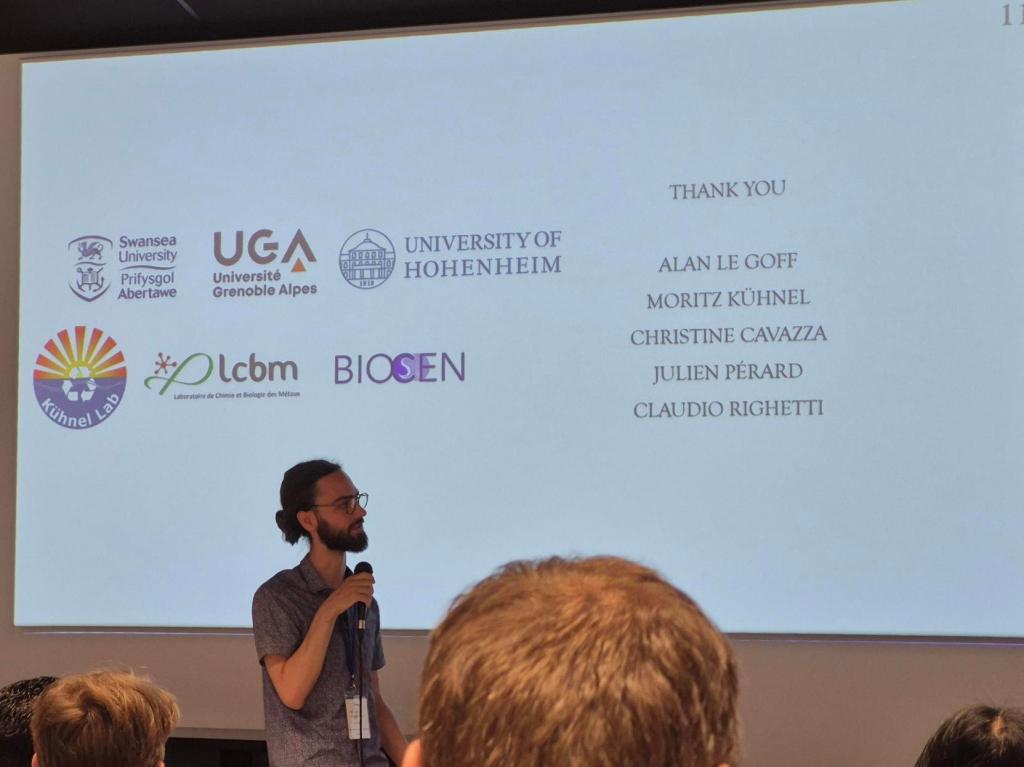
Léonard presented his PhD project on improving the O2-tolerance of electro- and photocatalytic CO2-to-CO conversion by carbon monoxide dehydrogenase (CODH) enzymes through the operation in tailored deep eutectic solvents. During his talk, he showcased promising CO2 reduction data of CODH immobilized on carbon nanotube-based electrodes as well as on functionalized graphitic carbon nitride, increasing their stability towards O2 through solvent tuning.

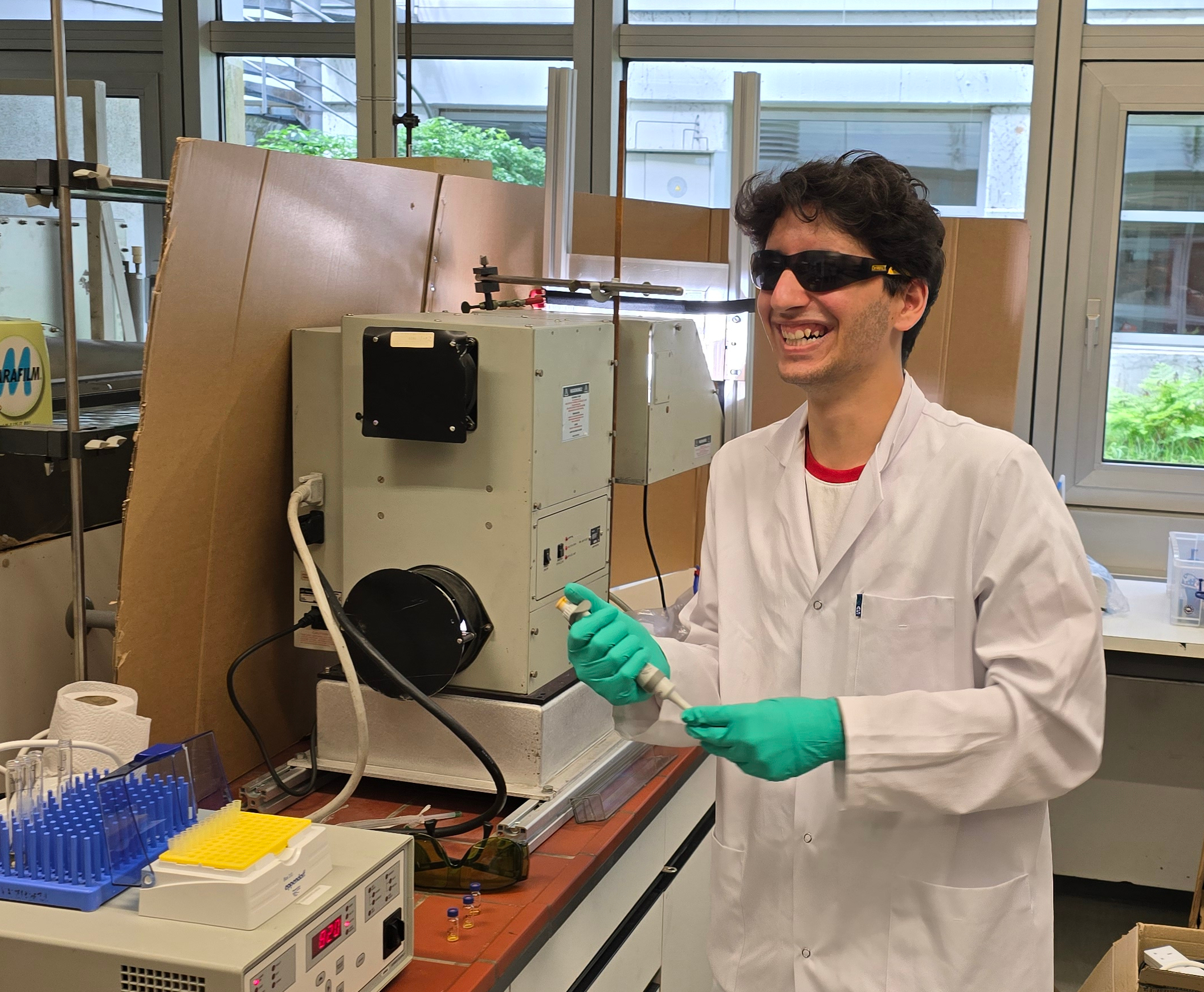
Zaid presented his poster on the application of different graphitic carbon nitride-based photocatalysts for cheap and green generation of H2 from biowaste. He aims to improve the solar-driven production of H2 coupled with the photocatalytic oxidation of cellulose through the use of engineered carbon nitride and tailored solvents.

It was great to meet and discuss with the lovely people there, enjoying the conference as well as the collective exploration of local pubs in Grenoble 🙂

Happy Holidays

Season’s Greetings from the Kühnel Lab 🎄✨

Last week, we visited the Stuttgart Christmas Market and had a fantastic time exploring the festive atmosphere together. The market was as enchanting as ever and a perfect place to wrap up the year.

For our institute’s get-together this week, we prepared something truly special – a ChemisTree! The Kühnel Lab members came up with the idea of this unique Chemistry Christmas Tree to foster teamwork. This innovative Christmas tree is inspired by chemistry and includes parts that chemists typically use in the laboratory to conduct experiments.

The ChemisTree was assembled from retort stands and clamps to create the framework. It was then decorated with a ball-and-stick model and round-bottom flasks. Finally, to make it really Christmassy, we filled the flasks with colourful solutions of non-toxic compounds.

And it was so much fun building the tree together! 😎

We hope you like our ChemisTree as much as we do, and we wish you all a merry and peaceful holiday season!

Best wishes, The Kühnel Lab🎅🤶🏽🎁🍀

Paper in Nature Chemistry

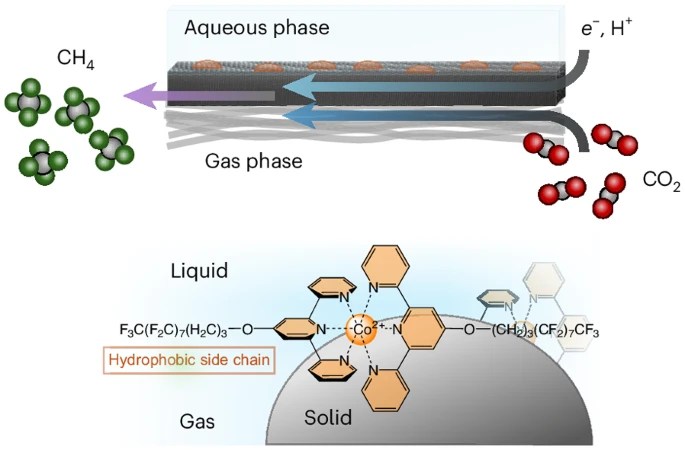
After a long review process, our joint paper with the Kornienko Lab in Bonn was finally published in Nature Chemistry (read paper here). The first experiments were performed by Max Kutter back in 2018! The paper shows how a mediocre homogeneous catalyst was turned into a highly active hetrogeneous electrocatalyst for CO2 reduction through the use of fluorine chemistry. Making a molecular cobalt terpyridine catalyst highly hydrophobic enables it to self-assemble on the surface of a gas-diffusion electrode, which alters its product selectivity from CO formation to the selective formation of CH4 at high current densities. We show that in this environment, proton transfer occurs via terpyridine ligands serving as a proton conduit. Free access to the paper is available here.

Moritz gives introductory interview

Moritz gives a detailed introductory interview to the University Press Office about his research and teaching career and motivation. Read the full interview here (Unfortunately, the interview is only available in German)

Additionally, we offer you an Instagram interview featuring a subtitled video that is accessible here: https://www.instagram.com/p/C-KOxpzsEjF/

We are hiring

The Kühnel Lab is looking for a motivated German-speaking PhD candidate (TVÖD E 13, 50%). We value team spirit, open communication and ambition. The successful candidate will work experimentally in the field of artificial photosynthesis e.g. on the synthesis and characterisation of materials and/or coordination compounds and performance testing as potential photo/electrocatalysts. The role includes duties in the organisation and teaching of the Department of Inorganic Chemistry, e.g. lab demonstrating. Applicants must hold a masters in chemistry or equivalent degree in a related discipline and must be fluent German speakers. The ideal candidate can demonstrate enthusiasm for research, motivation for acquiring new synthetic/analytical techniques and people skills. Experience in electrochemistry, photocatalysis and gas chromatography are desirable. Applications must be made in German via the online portal by 31/8/2024 (link).