
Léonard’s article about O2-tolerant bioelectrochemical CO2 reduction was published in EES Catalysis (read her paper here). His paper demonstrates that a combination of enzyme immobilisation on functionalised electrodes, maintaining the enzyme in a reduced state and using tailored solvents enables efficient and robust electrochemical CO2 reduction with a highly senstivie carbon monoxide dehydrogenase enzyme, even when the CO2 contains up to 14% O2.
Uncategorized
Welcome Hamza and Kazuki
Hamza Shehroz joins the Kühnel Lab from the State Center for Physical Sciences and Technology in Vilnius as a visiting PhD student funded by the Eramsus+ mobility programme. Hamza will work on waste conversion.
Kazuki Miyata joins us as from the University of Osaka as a visiting PhD student to work on carbon nitride-based photocatalysts.
Farewell Taylor
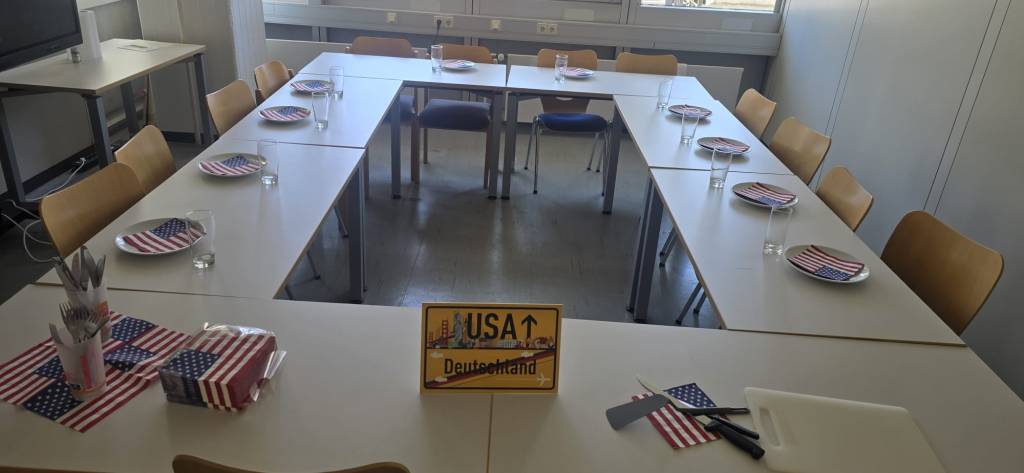
Taylor leaves the Kühnel Lab after completing her Master’s degree in Hohenheim. She will move to Ohio State University to undertake a PhD in Environmental and Soil Science with Nick Basta. We will miss you!
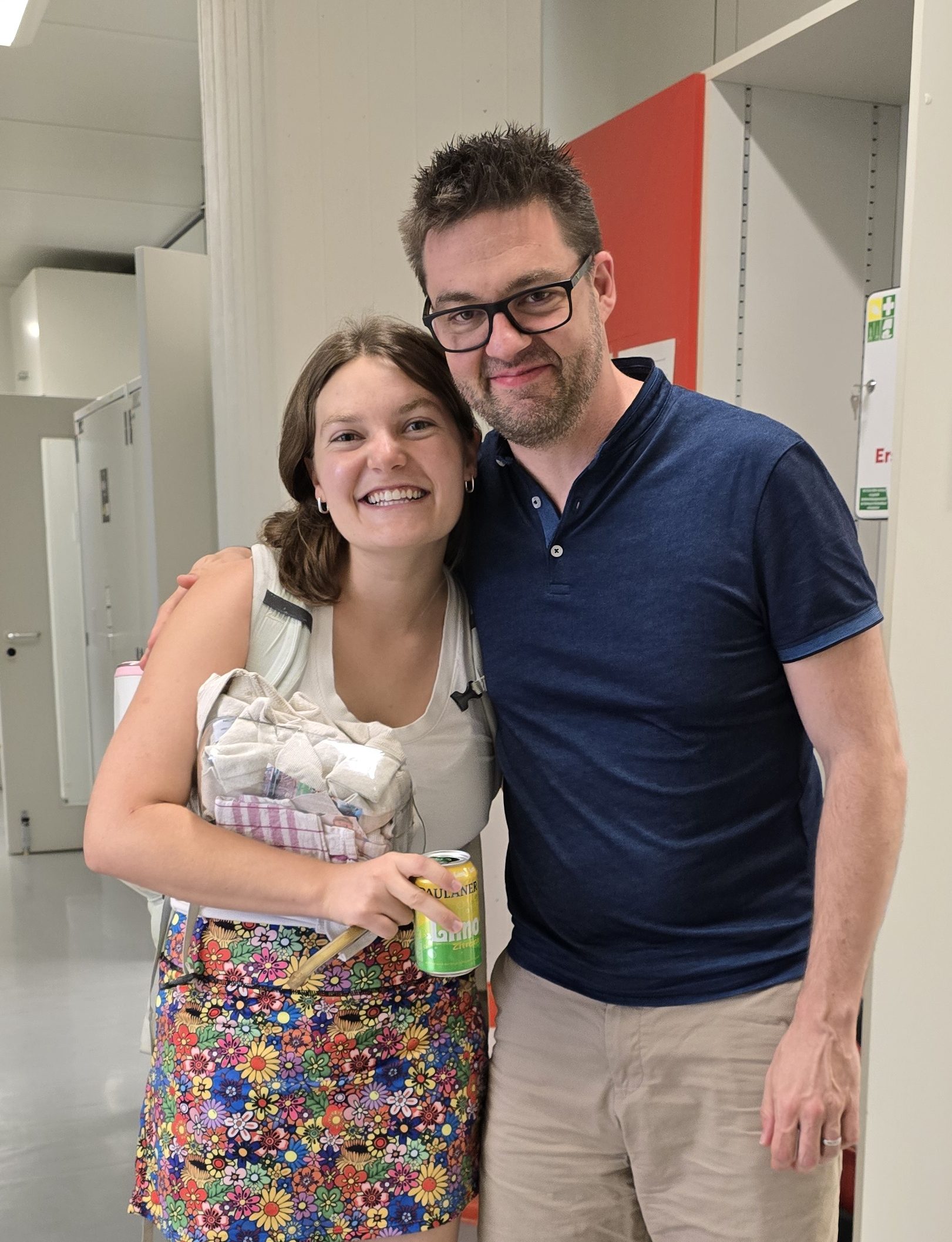
Farewell Thomas, Welcome Núria
Thomas Albani returns to Italy after three months in the Länd. Núria Pascual joins the Kühnel lab as a Joves i Ciència summer intern from Barcelona to work on photoreforming. Welcome to the group!
Léonard passes his viva
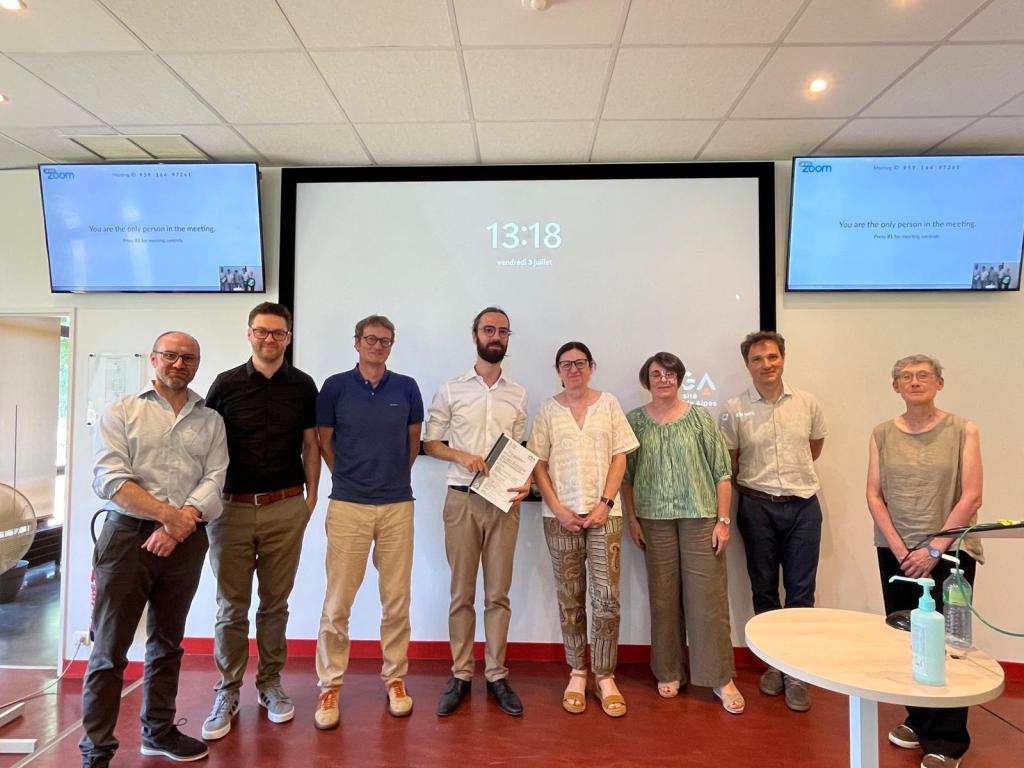
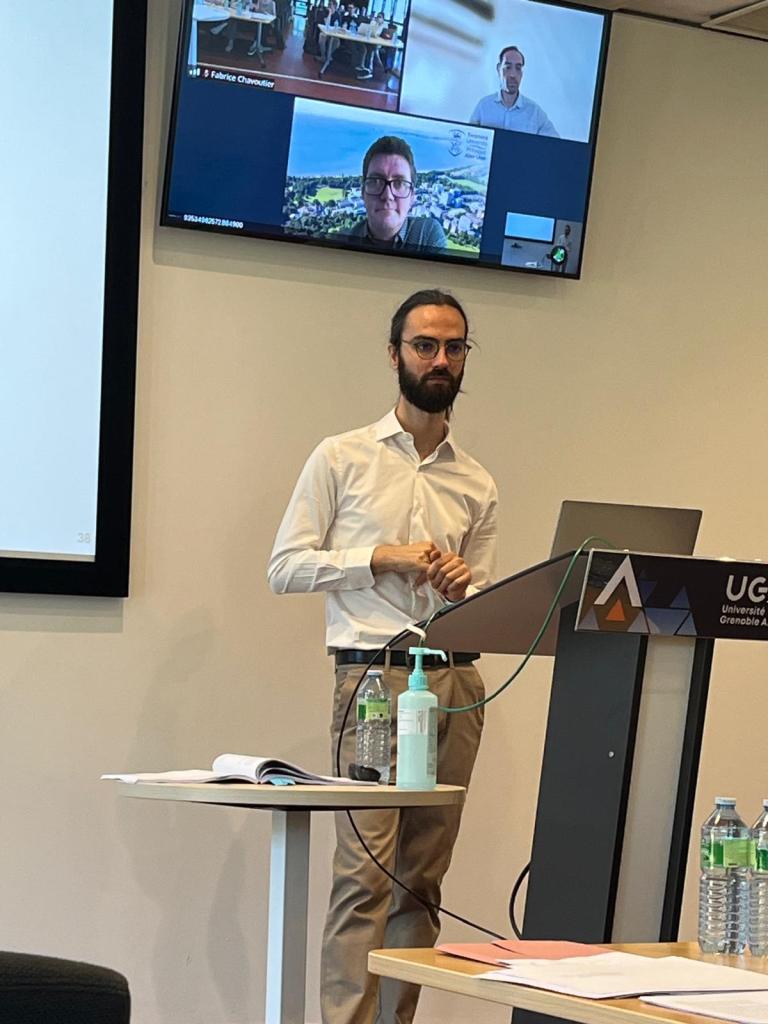
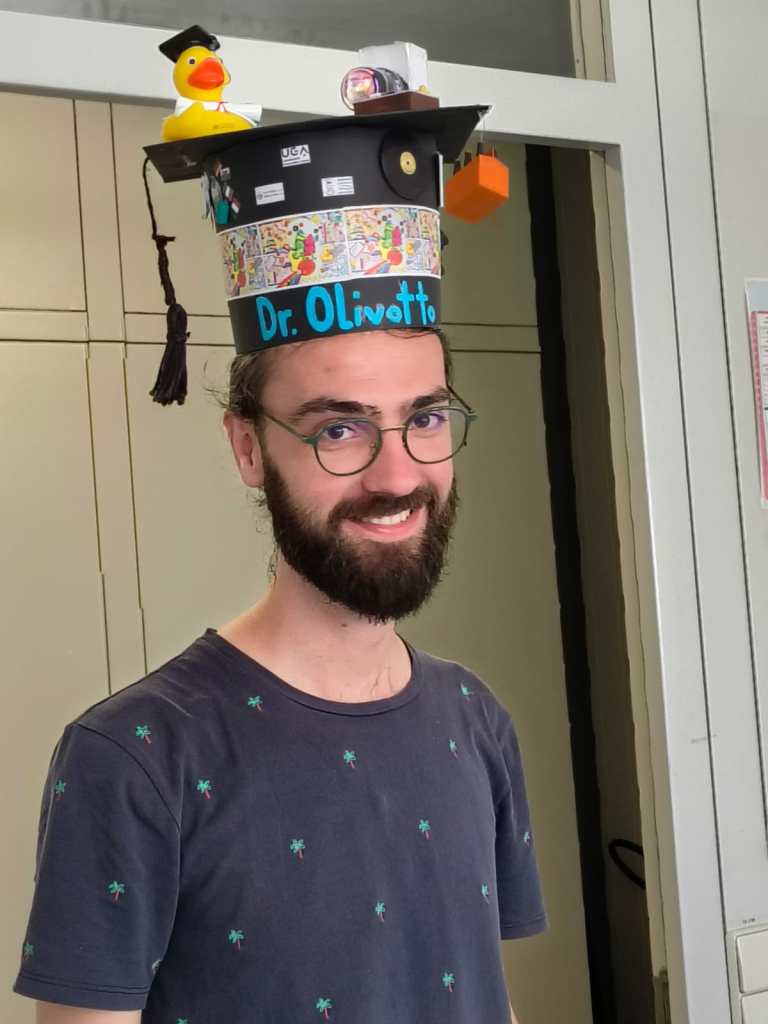
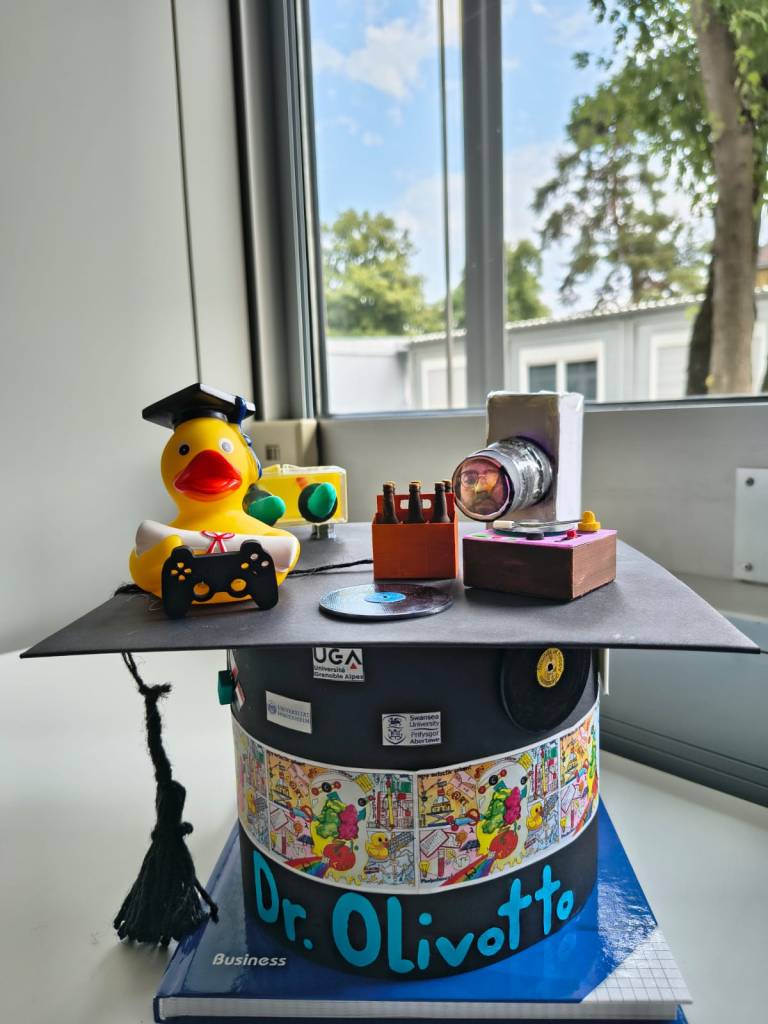
Congratulations to Dr. Léonard Olivotto on passing his PhD viva in Grenoble – well done! Many thanks to the examiners Julea Butt (East Anglia), Nicolas Plumeré (TU Munich), Murielle Chavarot-Kerlidou (CEA Grenoble), Nicolas Le Poul (Brest), Jérôme Chauvin (UGA) and Ian Mabbett (Swansea) for giving him proper scrutiny.
Léonard submits his thesis
Congrats to Léonard Olivotto on submitting his PhD thesis to both Grenoble and Swansea University. Big milestone! Time to relax now before the viva in July.
Energase project kick-off
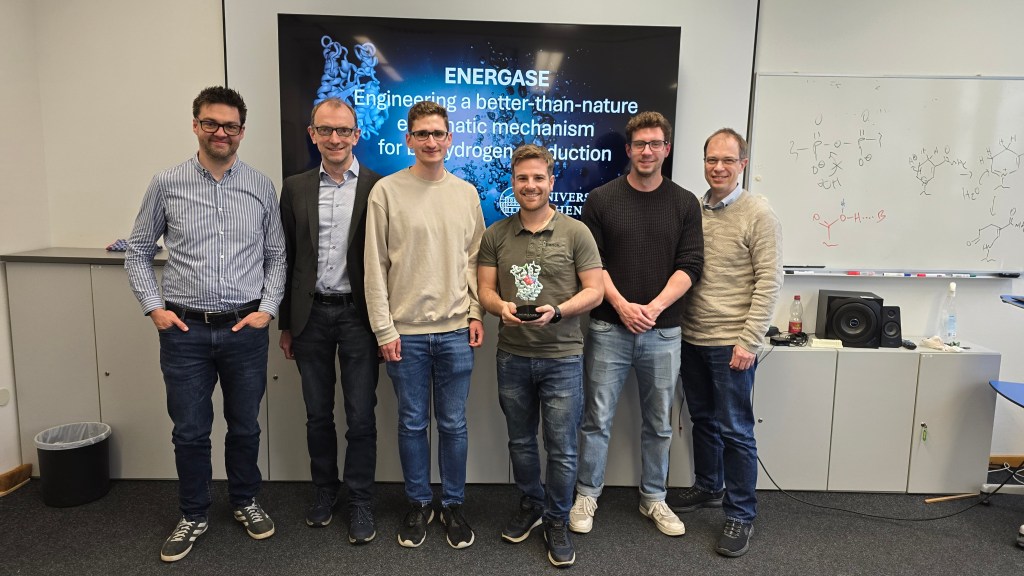
From left to right: Moritz Kühnel, Hajo Kries, Michael Stier, Fabrizio Casilli, Ewan McQueen, Johannes Kästner
We kicked off our ENERGASE project with a workshop at the University of Stuttgart’s Institut of Technical Biochemistry with our collaborators from the Kries and Kästner groups. In this project, we aim to jointly develop a de novo enzyme to produce green hydrogen through a non-natural mechanism. To do that, we are combining theory, synthetic biologyand nanotechnology. This blue-sky project is funded by the Carl Zeiss Stiftung and their CZS Wildcard programme for high-risk-high-reward ideas.
Welcome Thomas and Antonia
Thomas Albani joins the Kühnel Lab as from University of Milano-Bicocca as an intern funded by the an Eramsus+ mobility programme. Thomas will work on flow photochemistry for his Chemistry Master’s project.
Antonia Lämmle-Berkhan joins us as research intern as part of her Environmental Protection & Agricultural Food Production Master’s degree at Uni Hohenheim. She will work on biohybrid waste upgrading in collaboration with Christine Cavazza and Julien Pérard at CEA Grenoble.
We are hiring
The Kühnel Lab is looking for a German-speaking PhD candidate (TV-L E13, 50%) to join us from October 2026. We value team spirit, open communication and ambition. The successful candidate will work experimentally in the field of (semi)artificial photosynthesis e.g. on the synthesis of catalysts, characterisation of photo/electrochemical properties, or reaction engineering. The role includes organisation and teaching duties in the Department of Inorganic Chemistry, e.g. lab demonstrating and course supervision. Applicants must hold a masters in chemistry or equivalent degree in a related discipline and must be fluent German speakers. The ideal candidate can demonstrate enthusiasm for research, motivation for acquiring new synthetic/analytical techniques and excellent people skills. Applications must be made in German via the online portal by 31/5/2026 (link).
Welcome Ewan
Ewan McQueen joins the Kühnel Lab as a postdoc funded by the Carl-Zeiss-Foundation. Ewan obtained his PhD in Seb Sprick’s lab at the University of Strathclyde, where he developed organc photocatalysts for hydrogen production and CO2 reduction. Ewan will work on the ENERGASE project, in which we are developing a metal-free enzyme for hydrogen production in collaboration with the groups of Hajo Kries and Johannes Kästner at University of Stuttgart.

