
The Kühnel Lab is looking for a German-speaking PhD candidate (TV-L E13, 50%) to join us from October 2026. We value team spirit, open communication and ambition. The successful candidate will work experimentally in the field of (semi)artificial photosynthesis e.g. on the synthesis of catalysts, characterisation of photo/electrochemical properties, or reaction engineering. The role includes organisation and teaching duties in the Department of Inorganic Chemistry, e.g. lab demonstrating and course supervision. Applicants must hold a masters in chemistry or equivalent degree in a related discipline and must be fluent German speakers. The ideal candidate can demonstrate enthusiasm for research, motivation for acquiring new synthetic/analytical techniques and excellent people skills. Applications must be made in German via the online portal by 31/5/2026 (link).
Uncategorized
Welcome Ewan
Ewan McQueen joins the Kühnel Lab as a postdoc funded by the Carl-Zeiss-Foundation. Ewan obtained his PhD in Seb Sprick’s lab at the University of Strathclyde, where he developed organc photocatalysts for hydrogen production and CO2 reduction. Ewan will work on the ENERGASE project, in which we are developing a metal-free enzyme for hydrogen production in collaboration with the groups of Hajo Kries and Johannes Kästner at University of Stuttgart.
Season’s Greetings from the Kühnel Lab 🎄✨
To wrap up the year, the Kühnel Lab came together for a Christmas potluck dinner. The group did an amazing job decorating our lovely grey seminar room with a colourful mix of of chemistry and Xmas themes. The weather was a little too sunny for Xmas, but the decorations and the food more than made up for it.
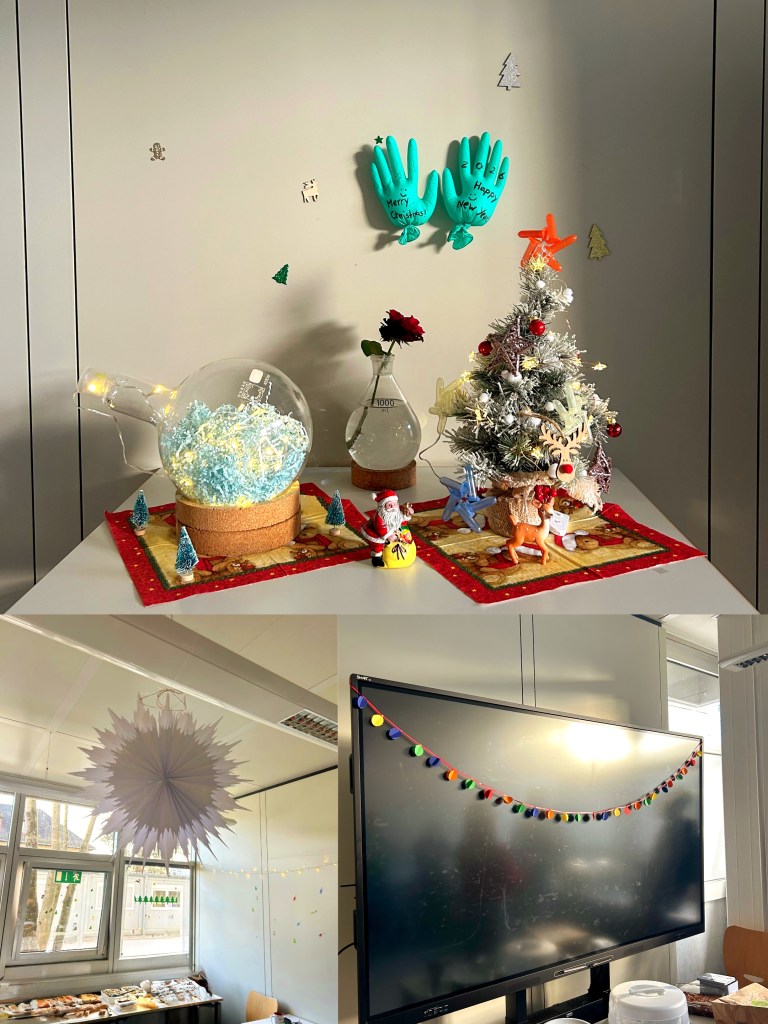
We were also really happy to be joined by some of our group alumni for a catch-up over a glass of mulled wine. Thanks to everyone for a great evening and a hugely successful year for the group!
The Kühnel Lab wishes you a merry and peaceful holiday season and a Happy New Year 2026!
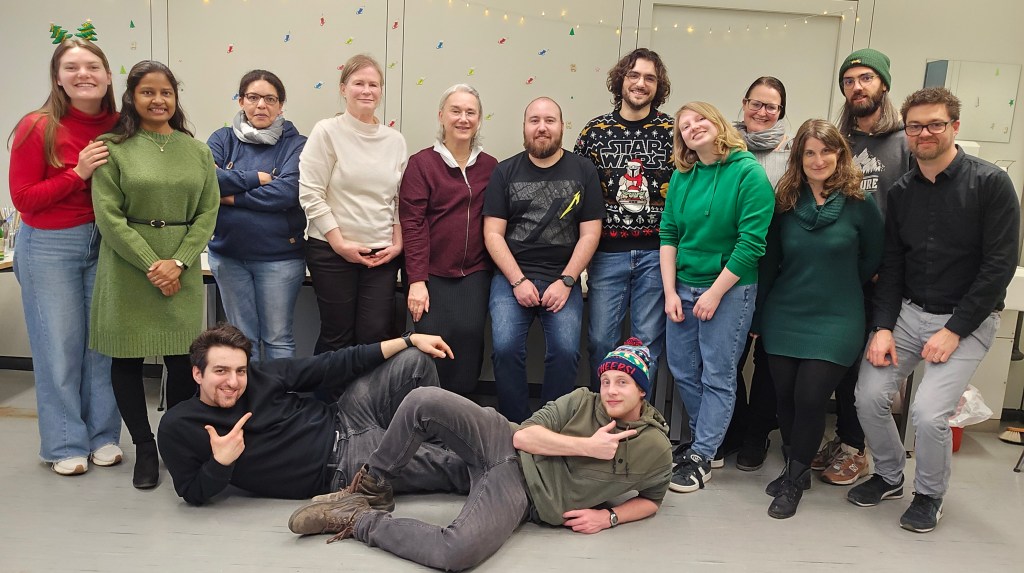
Front row: Zaid, Nils
Paper in ACS Sustainable Resource Management
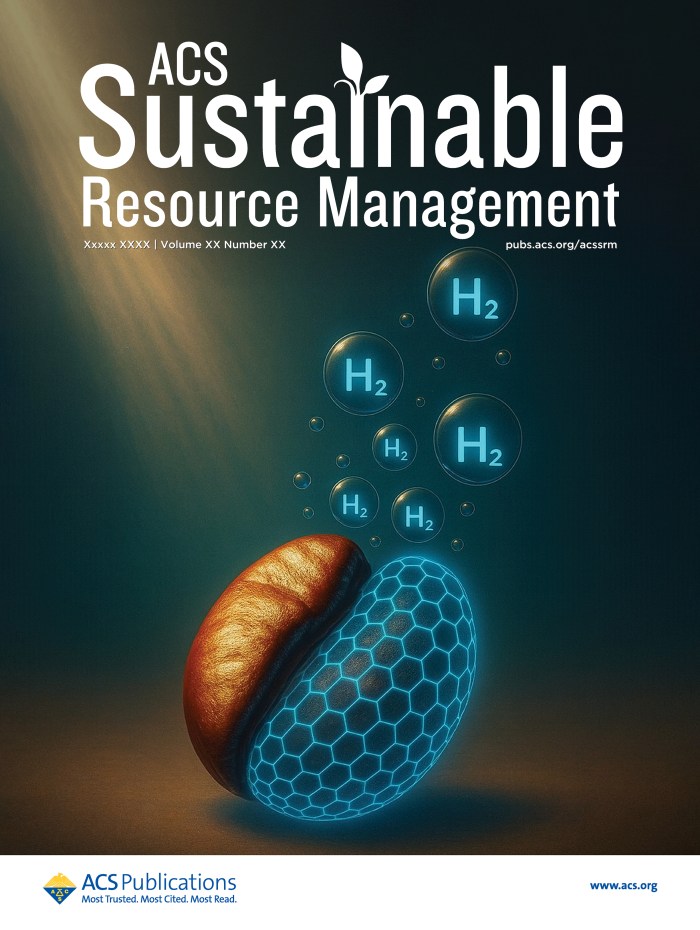
Astha’s article about a waste-derived photocatalyst for hydrogen evolution was published in ACS Sustainable Resource Management (read her paper here) and is featuerd on the supplementary cover. This paper demonstrates how a nanocomposite from waste coffee grounds (an abundant resource in the Kühnel Lab) and an anthraquinone-base covalent organic framework acts as an active catalyst for solar-driven hydrogen evolution from pure water. This COFfee catalyst forms a Z-scheme type heterojunction with improved charge separation and much improved performance compared to the pure COF that requires 75% less photocatalyst to produce the same amount of hydrogen.
Welcome Michail
Dr. Michail Papadakis joins the Kühnel Lab as a DAAD ERA Green Hydrogen Fellow from Université Aix Marseille in France. Michail obtained his PhD under the supervision of Dr. Maylis Orio studying thiosemicarbazone-based complexes as HER co-catalysts. In his postdoctoral work, he will devlop novel hybrid photocatalysts for hydrogen generation and CO2 reduction.
Paper in J Mater Chem A
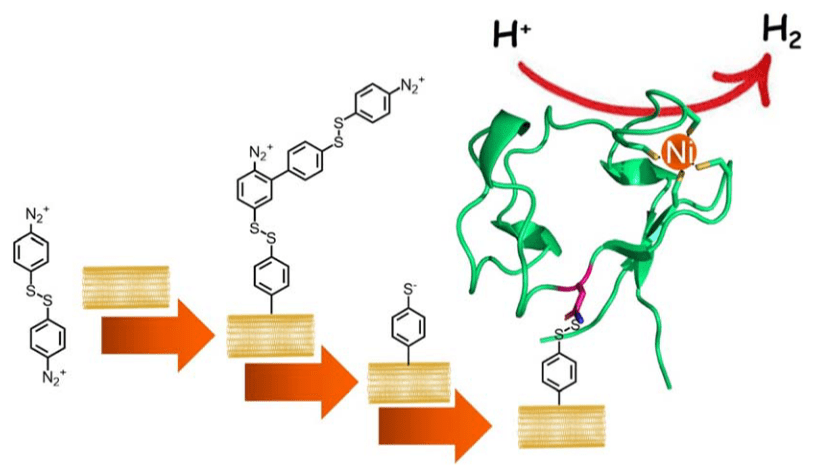
Léonard’s article about an artificial metalloenzyme for hydrogen evolution was published in the Journal of Materials Chemistry A (read his paper here). This paper led by our collaborators Christine Cavazza and Alan Le Goff in Grenoble demonstrates the site-specific attachment of a Rubredoxin protein to a carbon nanotube electrode via diazonium coupling of a thiophenolate. After substituting the Rubredoxin Fe for Ni, the resulting surface-bound artificial metalloenzyme acts as an efficient H2-evolving electrocatalyst with up to 4 mA cm-2 at 800 mV overpotential.
Welcome João
Dr. João Felipe Stival joins the Kühnel Lab as a DAAD ERA Green Hydrogen Fellow from Universidade Federal do Paraná in Brazil. João obtained his PhD under the supervision of Prof. Shirley Nakagaki in Curitiba on metal oxide-based photocatalysis. In his postdoctoral work, he will devlop novel hybrid photocatalysts for the photoreforming of waste.
Humboldt Reloaded project announced
Together with Andreas Schweiger from Plant Ecology, we are offering an undergraduate research project on Augmented Photosynthesis within the award-winning Humboldt Reloaded programme. This project will involve the synthesis of nanomaterials and their use to enhance the growth of food crops. Applications are now closed.
Lab reshuffle
After undertaking his BSc project and working as a research intern, Zaid Wonde leaves the Kühnel Lab after 18 months to continue his studies in microbiology. Nils Weimper leaves the lab after 6 months as a research intern to undertake his MSc project with Fabian Commichau. We will miss you guys!
Taylor Frost starts her interdisciplinary MSc project on photoreforming in collaboration with Sven Marhan in Soil Biology. Ellen Lambur starts as lab technician. Welcome to the Lab!
Atekelte Kassa leaves the lab to undertake a PhD in physics at the University of York.
Paper in Trends in Chemistry
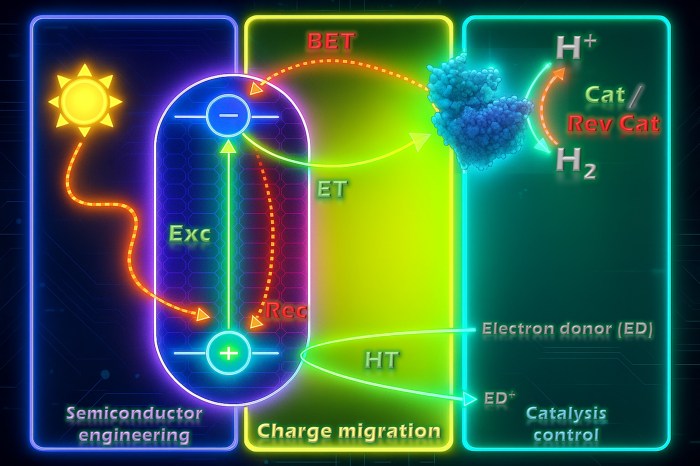
Léonard’s article about the mechanistic details of semiconductor–enzyme hybrid photosystems was published in Trends in Chemistry (read his paper here). The paper highlights exciting work from the Dukovic group at Boulder that examines the various competing electron transfer pathways in biophotocatalysts that are unobservable by direct means. Using kinetic modelling, the work shows how often overlooked pathways such as back electron transfer and reverse reactions are key for achieving a high activity (read original paper here).
 Kühnel Lab