
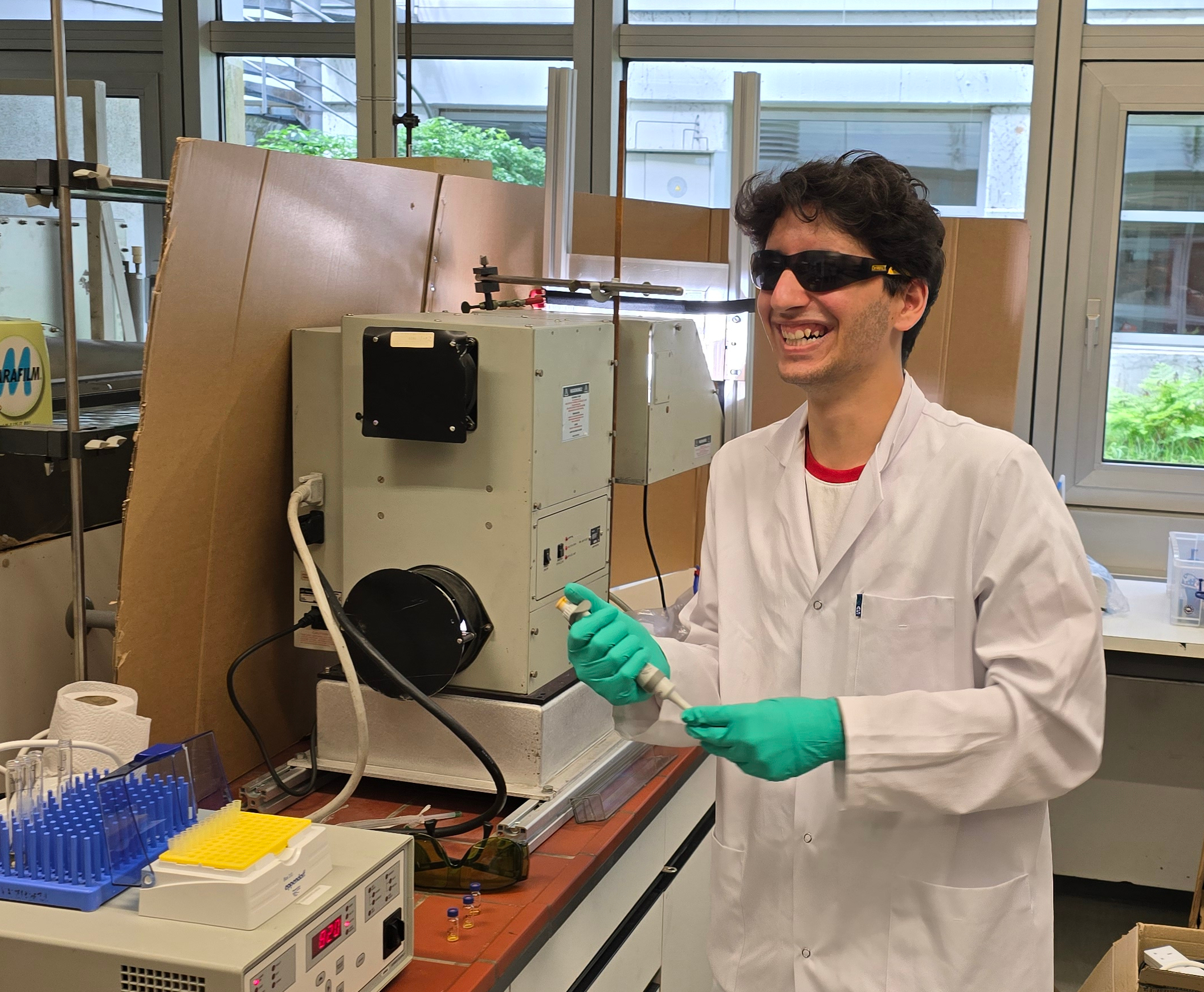
Mücahit Cem Peküz joins the Kühnel Lab as a research intern from Gebze Technical
University, Instanbul.
Mücahit Cem Peküz joins the Kühnel Lab as a research intern from Gebze Technical
University, Instanbul.

Moritz is invited to the joint meeting of the CNRS Groupes de Recherche Solar Fuels and Photo Electro Stimulation in Grenoble 24th-26th June (link to meeting) and delivers the IMBG Plenary Lecture about our research. Many thanks to the organisers for their invitation to this very enjoyable meeting!
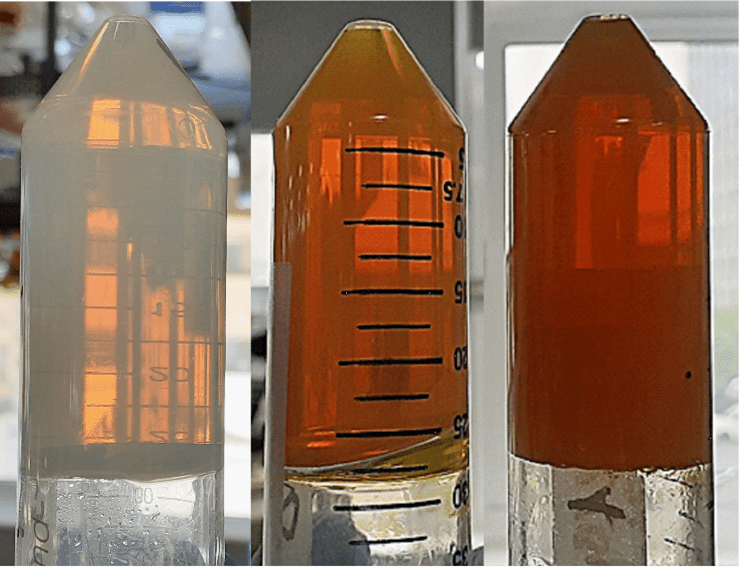
Read Maite’s paper on MOF-based photocatalysts that was part of a bigger collaboration with the University of the Basque Country and Oulu University. In this paper, we investigate hydrogels based on disordered MOFs and study how different ways of platinum incorporation affect their performance for photocatalytic hydrogen evolution (link to paper).

Linnea Ossenkop and Zegha Ghirmay join the Kühnel lab as technicians. Zaid Wonde starts as research intern working on photocatalytic hydrogen generation form biomass.

Finally, customs let us import our equipment from Wales to Germany. 4 pallets containing almost 1000 kg of lab equipment have been shipped from Swansea University to our new lab space in Hohenheim, all looking safe and sound. Time to set up the GC and solar simulator to get the research going!
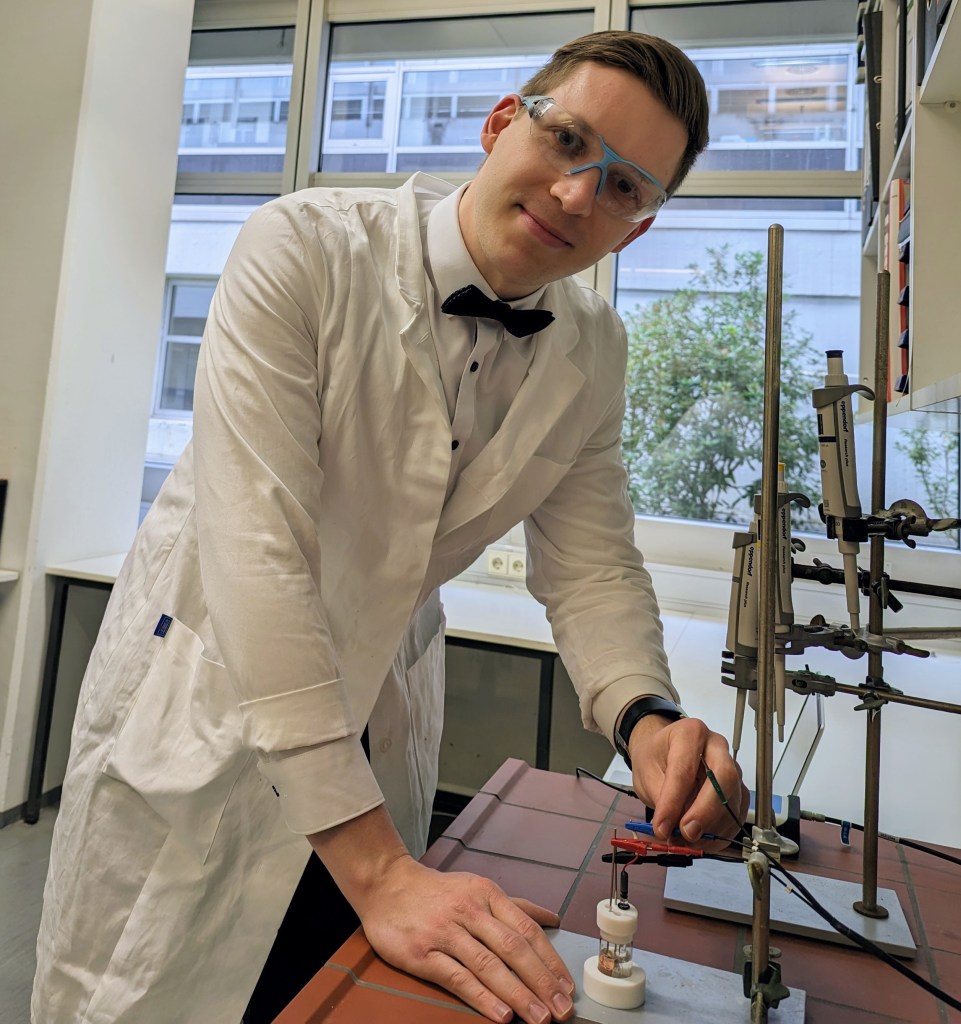
Kai Lucas Brinschwitz joins the Kühnel Lab as a research intern from University of Stuttgart. Kai will soon start his Master’s project on electrochmical waste oxidation in collaboration with Christina Roth’s Lab at University of Bayreuth. We are expecting results as good as Kai’s attire!

We spent half a week packing up all our equipment at Swansea University for shipping. Thanks to Brexit, there is still a lot of paperwork to be completed before it will be collected and sent to Hohenheim. Fingers crossed it’ll go through customs clearance and arrives in one piece.

Read our paper with Ali Rauf’s group at Lahore University of Management Sciences on how to turn plastic waste and CO2 into formic acid using electricity. We stabilised electrodes based on earth-abundant elements by redox-doping to enable simultaneous oxidation of ethylene glycol and reduction of CO2. Both half-rections yield formic acid as the sole product, making this a green, convergent approach to valueable feedstocks currently produced from fossil reosurces (link to paper).
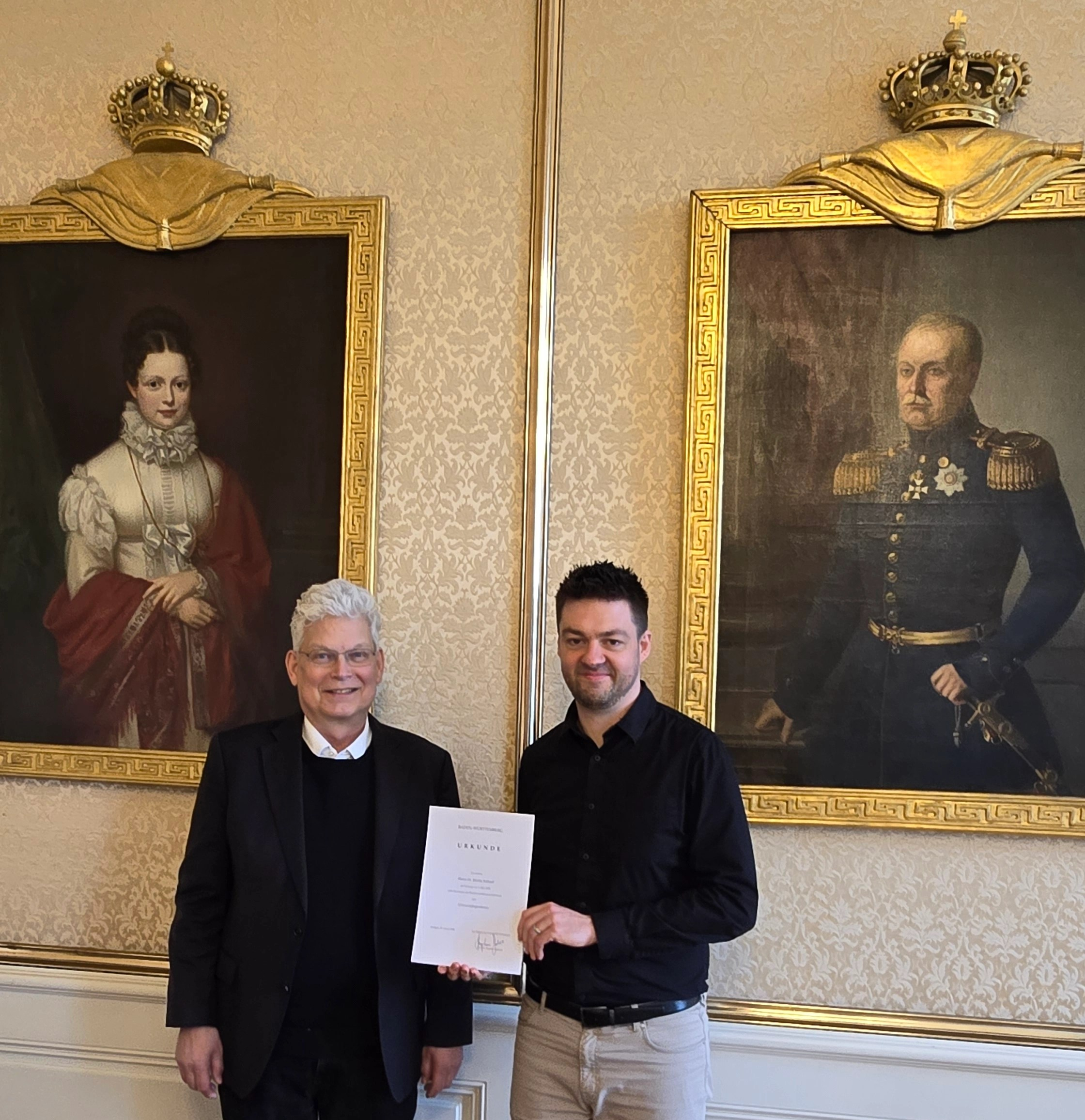
Moritz is appointed to a tenured position as Chair of Inorganic Chemistry (W3) in the Institute of Chemistry at the University of Hohenheim. Moritz also serves as managing director of the Institute of Chemistry and as Head of the Department of Inorganic Chemistry (formerly Department of Bioinorganic Chemistry and Chemical Evolution).

Read our paper with Sudha Pitchaimuthu’s group at Heriot-Watt on photoelectrochemical hydrogen production from wastewater. We demonstrate a dual protection strategy to enhance the stability of WO3/BiVO4 photoanodes with TiO2, enabling us to couple it with hydrogen evolution from polluted mine effluent (link to paper).

